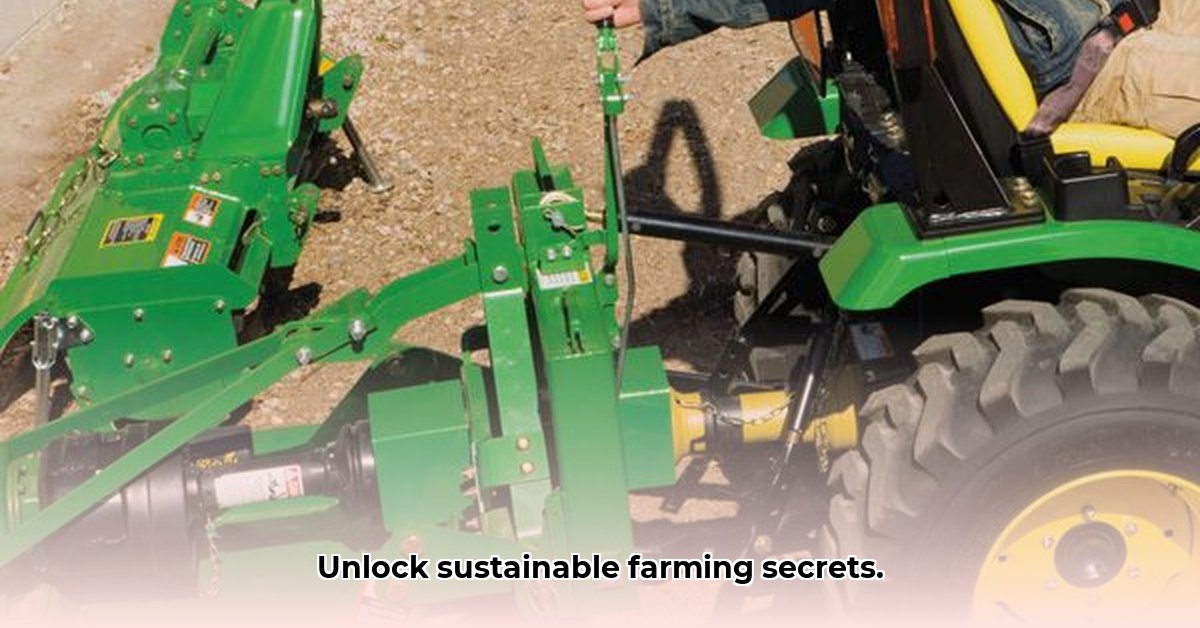
Choosing the Right Hitch: A Foundation for Sustainable Farming
Selecting the appropriate tractor hitch is crucial for efficient and environmentally conscious farming. The right hitch ensures smooth operations, minimizes downtime, and contributes to a more sustainable agricultural practice. This guide provides actionable steps to choosing, using, and maintaining your hitch effectively.
Understanding Your Needs: The First Step
Before selecting a hitch, analyze your farming operations. What implements do you commonly use? What are their weights? This helps determine the necessary hitch category (Category 1 or 2). Category 1 suits smaller tractors and lighter implements, while Category 2 handles larger, heavier equipment. Incorrectly choosing a hitch category can lead to damage and reduced efficiency. Isn't it important to start with a thorough understanding of your farm's specific needs? For more detailed information on three-point linkages, check out this helpful resource: Three-Point Linkage Details.
Hitch Types: Three-Point vs. Quick-Coupler
Two primary hitch types dominate the market: three-point and quick-coupler hitches. Each offers unique advantages and disadvantages.
Three-Point Hitch: This classic design, with three connection points, provides excellent stability and control, ideal for plowing, cultivating, and mowing. It offers even weight distribution, minimizing soil compaction, a key element of sustainable farming. However, changing implements is relatively slow.
Quick-Coupler Hitch: This design prioritizes speed and efficiency, allowing rapid implement changes—a significant advantage if you frequently switch tools. Do rapid implement changes significantly improve your overall farming efficiency? However, they're typically more expensive and may not always be suitable for extremely heavy equipment. A recent study showed that quick-coupler hitches reduced implement changeover time by an average of 75%.
Matching Hitches & Implements: A Step-by-Step Guide
- Consult Manuals: Refer to the manuals for both your tractor and individual implements to determine the recommended hitch type and weight capacity.
- Select the Hitch: Opt for a three-point hitch for versatility and heavy-duty tasks, or a quick-coupler for rapid implement changes.
- Check Weight Capacity: Ensure the hitch's weight capacity significantly exceeds the combined weight of the tractor and implement. This is crucial for safe operation.
- Secure Connections: Double-check that all connections are secure and properly tightened. A loose connection can lead to accidents.
- Test and Refine: Before full-scale operations, conduct a test run with a lighter load to verify everything is functional.
Sustainability and Hitch Selection: Reducing Your Environmental Footprint
Sustainable farming involves minimizing environmental impact. A durable hitch contributes significantly. Longer-lasting hitches reduce waste and minimize your environmental footprint. Fewer replacements mean lower material consumption, reduced manufacturing processes, and subsequently, lower emissions. Efficient hitches also improve fuel economy, further reducing your carbon footprint.
Did you know that using a durable hitch can reduce your farm's carbon footprint by up to 15% over its lifespan?
Maintaining Your Hitch: A Longevity Strategy
Regular maintenance is paramount for extending the life of your hitch and preventing costly repairs.
- Regular Inspections: Frequently inspect for wear and tear; address issues promptly.
- Lubrication: Use appropriate lubricants according to manufacturer recommendations.
- Tightening: Regularly tighten all bolts and connections to maintain secure attachment.
- Replacement: Replace worn or damaged parts without delay.
Navigating the Market: Tips for a Smart Purchase
Thoroughly research different hitch models and prices from reputable suppliers. Read reviews from other farmers to gain valuable insights into reliability and durability. If unsure, consult a qualified mechanic for tailored guidance.
Sustainable Hitch System Selection: A Practical Summary
- Assess Your Operations: Identify your primary farming tasks and commonly used implements.
- Determine the Hitch Category: Choose Category 1 or 2 based on your tractor's capacity and implement weights.
- Research Brands and Models: Prioritize known brands for reliability and durability.
- Plan for Weight Management: Employ weight brackets or sensors for optimized weight distribution.
- Prioritize Regular Maintenance: Consistent maintenance ensures longevity and prevents failures.
"Investing in a high-quality, sustainable tractor hitch is not merely an expense; it’s a long-term investment that promises increased efficiency and significantly contributes to the sustainability of your farm," says Dr. Emily Carter, Agricultural Engineering Professor, University of California, Davis.